Experience Type: Honors Seminar
Competency: Creativity
Dates: January 2026 - April 2026 (Spring Semester)
Overview
"From Neurons to Picasso" (ARTE 3041C / NS 3041C) is an interdisciplinary honors seminar co-taught by Kris Holland and Ilya Vilinsky at the University of Cincinnati. The course pairs neuroscience with art-making, alternating between lecture weeks and hands-on lab weeks to explore how the brain constructs visual reality and how artists have always, knowingly or not, exploited that construction. Over the semester, I dissected a cow eyeball, watched a spectrometer read the exact wavelength spectrum of different light bulbs, drew without looking at my hand, and read everyone from Kandel to Alva Noë.
The seminar gave me a scientific vocabulary for something I had been intuiting as a designer: that what people see is not what is there. The gap between retinal input and perceptual experience is not a flaw in the system. It is the system. My final project applies this directly to my discipline, using forced perspective and optical illusion principles in a series of wooden shelf forms that appear to recede deeper into space than they physically do. This course showed me that the most powerful design decisions are the ones that account for how human perception actually works, not how we assume it does.
What's the Class About?
The course ran every Thursday evening across the full spring semester, structured as an alternating rhythm between Ilya's neuroscience seminars and Kris's art and philosophy lectures, with lab weeks threaded in between. Each pairing was designed so the science informed the making, and the making tested the science.
The semester opened with foundational questions: What is the brain? What is art? Kris led a blind contour drawing exercise on the first night, where you draw a subject without looking at your hand. It sounds simple but it is disorienting. Your brain wants to correct what you are drawing based on what it expects to see, and the exercise strips that away. You are left with pure sensory input, no cognitive editing. The resulting drawings are strange and imperfect and honest. It was a perfect entry point for a course about the gap between perception and reality.
[Images: Blind Contour Drawing Exercise]
WARNING - COW EYEBALL DISSECTION PIC BELOW
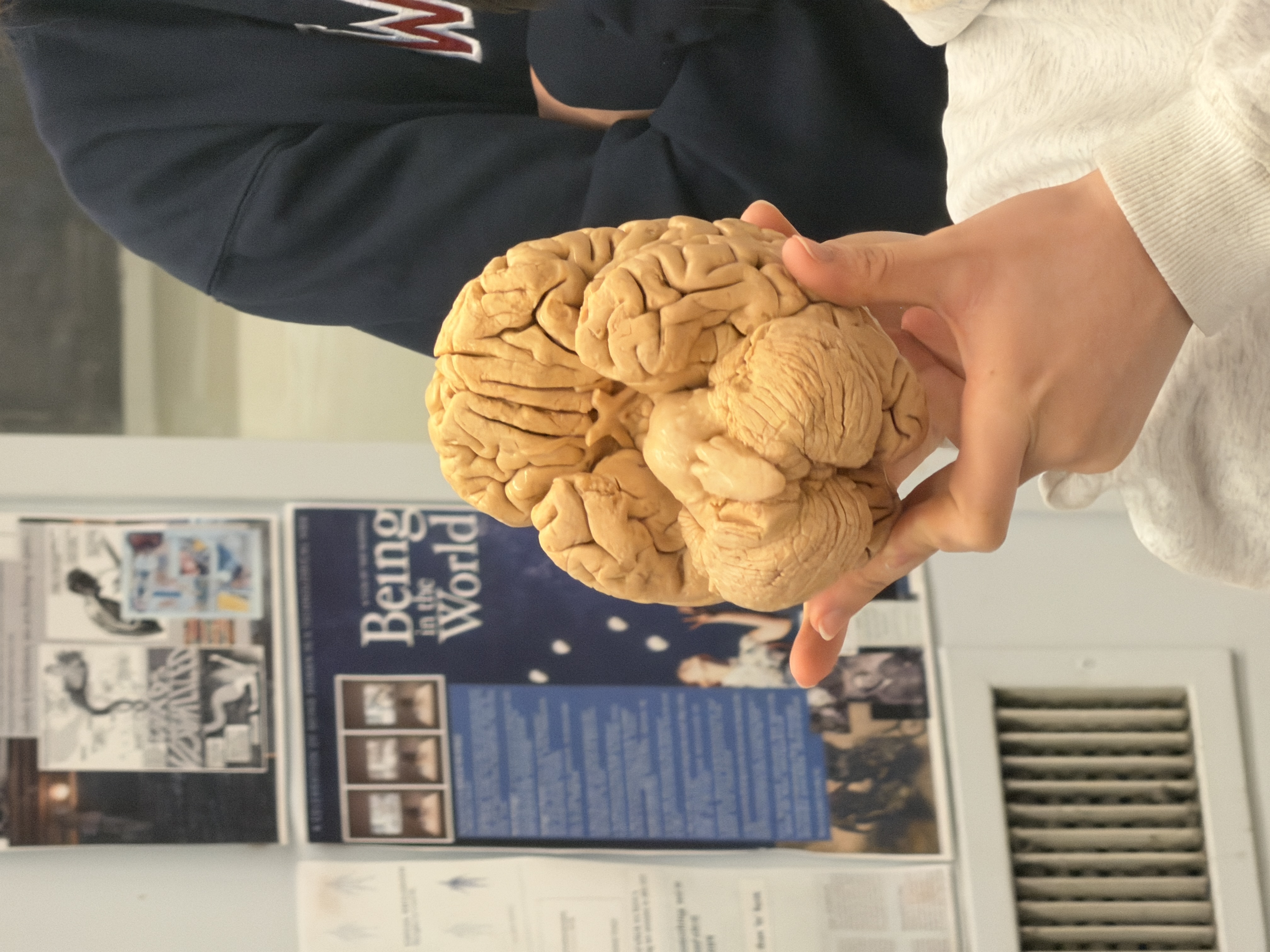
In Week 2, Ilya ran an illusions workshop exploring the science of sight, grounding us in how the visual system constructs reality from incomplete data. Week 3 was the cow eyeball dissection. We worked through the physical anatomy of vision: the retina, the lens, the vitreous humor. Holding the actual origin of sight in your hands while studying how it translates light into neural signal made the theory visceral. It connected the biology of seeing to the perception theory we had been reading about in Livingstone's "Vision and Art" and Kandel's "Reductionism in Art and Brain Science."
[Images: Cow Eyeball Dissection Lab]
The middle of the semester shifted into neuroplasticity (Week 6), memory (Week 7), and then a standout session on color in Week 8. A guest lecturer, Dr. Buschbeck, brought in a spectrometer and read the exact light spectrum of different bulbs in real time. Watching the instrument decompose "white" light into its actual wavelength components made abstract color theory tangible. We could see, quantified on a screen, why two lights that look identical to the eye are composed of completely different spectral distributions. That session connected directly to simultaneous contrast, color illusions, and the broader theme that the brain is always interpolating, always constructing a version of reality that is useful rather than accurate.

Later units explored embodied cognition through Noë's "Out of Our Heads" (the idea that perception is not just in the brain but distributed across the whole body), Alva Noë's "Strange Tools" framework (art as a practice that reorganizes human experience), a FLUXUS lab on material engagement theory, and a final session on AI and art generation. The reading list was dense: Eagleman's "Livewired," Kantrowitz's "Drawing Thought," Farinella and Ros's "Neurocomic," Costandi's "Neuroplasticity," Gregory's chapter on illusions. Every week built on the last.
So What?
This seminar reframed how I think about design at a fundamental level. As an industrial designer, I have always been concerned with form, materiality, and user interaction. But this course gave me a neuroscientific framework for understanding why certain forms read the way they do. The answer is not in the object. It is in the perceptual system of the person looking at it.
The blind contour exercise was a small but sharp example. When you draw without looking, you produce something that reflects what your hand actually traced rather than what your brain wanted to correct it into. That tension between raw sensory data and cognitive expectation is exactly what optical illusions exploit, and it is the conceptual backbone of my final project.
Livingstone's "Vision and Art" was the reading that stuck with me most. Her analysis of how painters have intuitively leveraged the neuroscience of vision, using luminance contrast, peripheral vision tricks, and color afterimages, gave me a direct bridge between the course content and my design discipline. Gregory's chapter on illusions from Week 6 was even more targeted: it laid out the specific perceptual mechanisms that make forced perspective and spatial illusions work. That chapter is essentially the academic grounding for my shelf project.
The spectrometer demo in Week 8 was another turning point. Seeing color quantified as wavelength, and understanding that two perceptually identical colors can have entirely different spectral signatures, made me think differently about material selection and surface finish in product design. Color is not a fixed property of an object. It is a negotiation between the object, the light source, and the viewer's visual system. That is a design problem, and this course taught me to see it as one.
The Strange Tools framework from Kris also resonated deeply with how I already think about making. Noë argues that art is not a product but a practice that reorganizes experience. My perspective shelves do exactly that: they present a familiar form (a shelf) and then use forced perspective to disrupt the viewer's spatial assumptions. The object reorganizes how you perceive depth. It is a strange tool.
Now What?
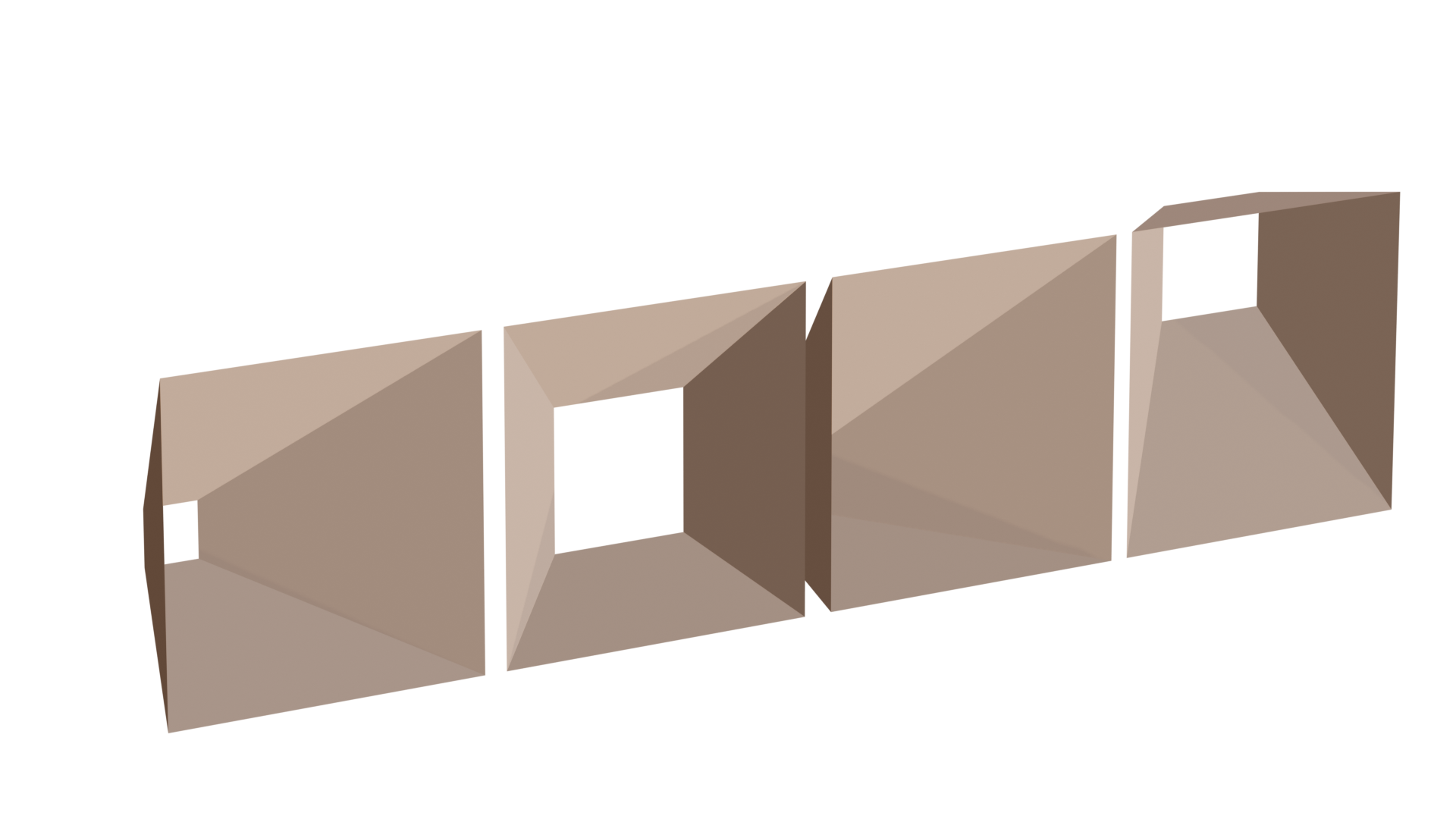
My final project for the seminar is a series of wooden shelf forms that use forced perspective as a design principle. Each iteration starts from the same square footprint and outer dimensions, but the position of the back plane changes to create different depth illusions. From the front, some forms appear to recede much further into space than they physically do. Others appear nearly flat. The illusion only breaks when you see the piece from the side and realize how narrow it actually is. I developed multiple iterations in 3D before building, keeping the formal language consistent while varying the perceptual effect.
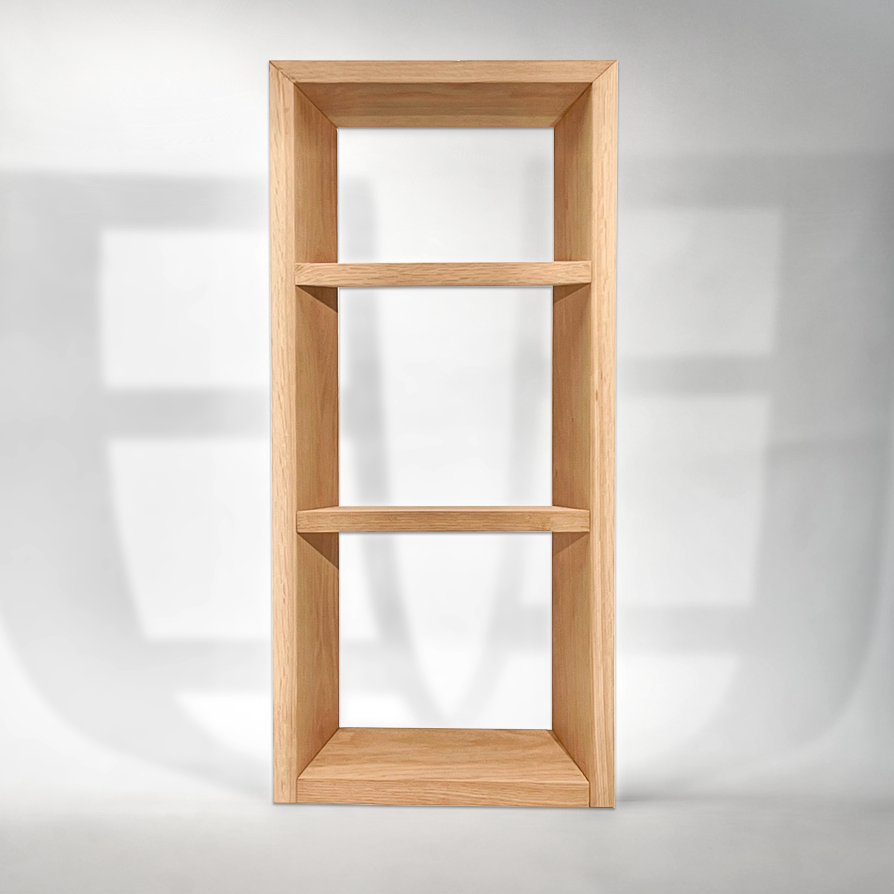
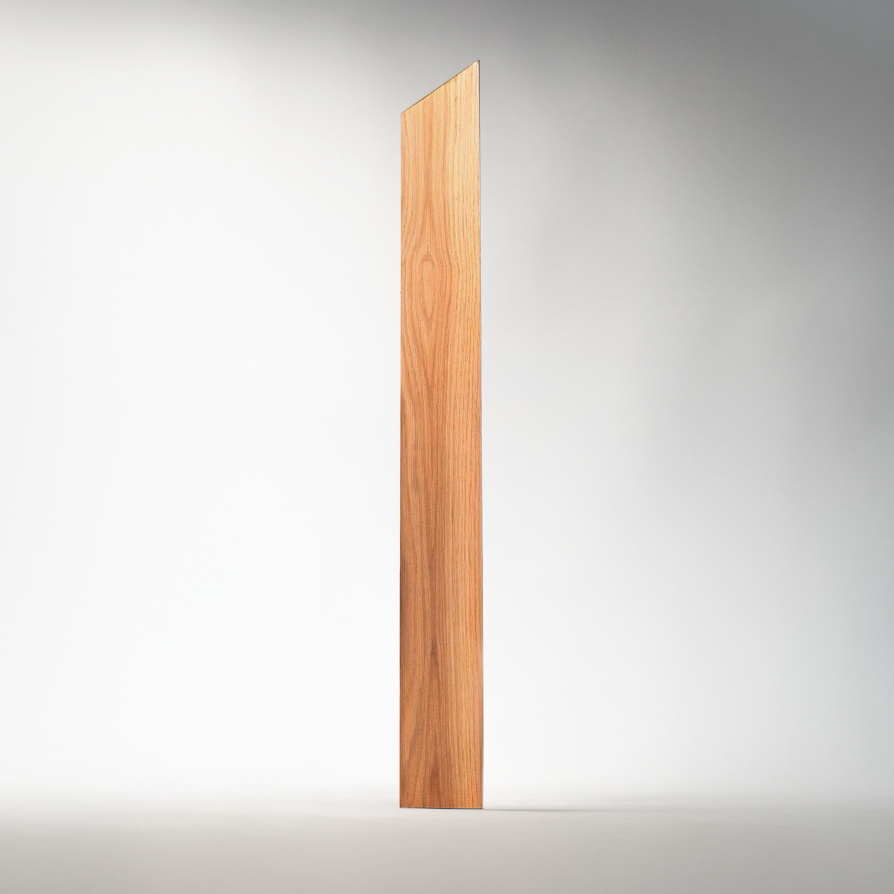


Warped Columns Final Project
This project is a direct output of the seminar. Without the neuroscience of visual perception, specifically the gap between what the retina receives and what the brain constructs, the shelves would just be furniture. With that knowledge, they become a statement about how designed objects can acknowledge, exploit, or reveal the perceptual systems of the people who use them.
Going forward, this course has permanently changed how I approach form-giving. I now think about the viewer's visual system as an active collaborator in the design, not a passive receiver. Whether I am designing a product, a space, or an experience, the question is no longer just "what does this look like?" but "what does the brain do with this?" That shift in framing is the most valuable thing I am taking from this seminar, and it will inform my practice for the rest of my career.
I am also grateful that this course brought me back into Kris Holland's orbit. My relationship with Kris goes back to the UHP Discover program in 2023, when I worked with his Strange Tools Research Lab building their website. Taking this seminar two years later felt like a full-circle moment, and it deepened my understanding of the philosophical framework that underpins his work and, increasingly, mine. After three years, I've picked up on a lot of philisophy and I can understand a bit more of Kris's references and the nuance that goes along with them...
The final exhibition is in the coming weeks; I am excited to present and to see my classmates' projects!